
One person, start to finish
You talk to the builder, not a middleman. No briefs passed down a chain, no "I'll check with the team". Decisions happen in one conversation.
Business websites, landing pages and web apps — designed, built and launched by one person who answers his own messages. Twenty-six live sites across twelve sectors, every one of them working right now.
Reply within one working day · Fixed price agreed upfront · No obligation


Delivered for clients across
How it works
No discovery workshops, no 40-page proposals. You describe the job, I build it, it goes live.
One message or a short call. What the business does, who it's for, and what you want the site to achieve. That's enough to start.
You get a fixed price and a live preview link within days. You comment, I adjust — so you're never waiting until the end to see it.
Launched on your own domain, with a short walkthrough of how to edit it yourself. Everything handed over — you own it outright.
Why work with me
Most small businesses get sold a website by a salesperson and built by someone they never meet. Here, the person who quotes you is the person who designs it, codes it and launches it — which is why it takes days instead of months, and why nothing gets lost in translation.
You talk to the builder, not a middleman. No briefs passed down a chain, no "I'll check with the team". Decisions happen in one conversation.
A landing page in 3–5 days. A full business site in one to two weeks. You see a working link early, so there are no big surprises at the end.
You get a written quote before anything starts. The number doesn't move halfway through because something took longer than expected.
Clean structure, real page titles, fast images and a layout that works on a phone first — because that's where most of your visitors actually are.
The domain, the hosting, the code and the content are yours. No monthly ransom, no lock-in, no "we'll export it for a fee" when you want to move.
Prices, photos, opening hours, news posts — all editable from a simple panel, with no code and no call to me. I'll show you how in ten minutes.
Who you're working with
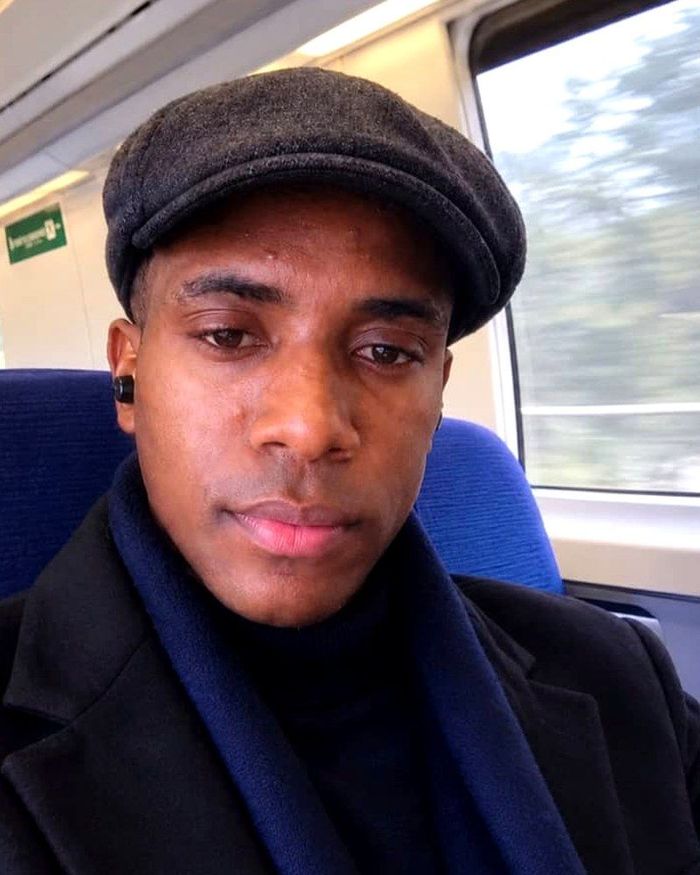
I'm a self-taught web developer and designer. I build business websites, landing pages and web apps for clients here in Nigeria and further afield — the kind of site that makes a business look credible and makes it easy for a customer to get in touch.
I learned by building, not by collecting certificates, and it shows in how I work: I'd rather ship you a working site in a week than a proposal in a month. Every project on this page is live and clickable, so you can judge the work before you spend anything.
You deal with me from the first message to the launch. No account manager, no handover to a junior, no waiting three days for an answer.
Selected work
Every link below opens a real, working product — not a mockup. Different sectors, different design languages, the same standard of craft. Click any of them and judge for yourself.
A live immigration-planning platform for people who want to study, work or migrate abroad without paying visa agents. Built around a master handbook, 19 practical tools, an AI planning assistant and a private community — with a complete sales and checkout flow.

A live financial-education platform built around a 74-chapter master book, a 90-day wealth accelerator, 10 interactive calculators and six bonus playbooks — teaching systematic debt reduction, multi-currency planning and long-term wealth retention.

A conversion-focused local services site with a 24/7 emergency call bar, service cards, neighbourhood coverage and a validated enquiry form — built so a panicking homeowner can find the phone number in one tap.
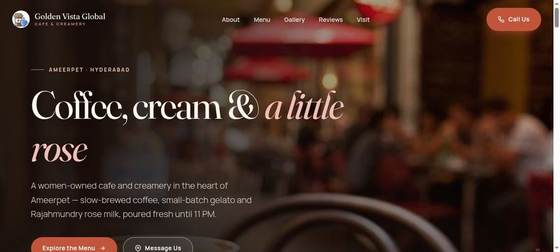
A warm editorial hospitality site with a full menu grid, dark mosaic gallery, opening-hours panel and guest feedback section. Designed to feel like the room you're about to walk into.
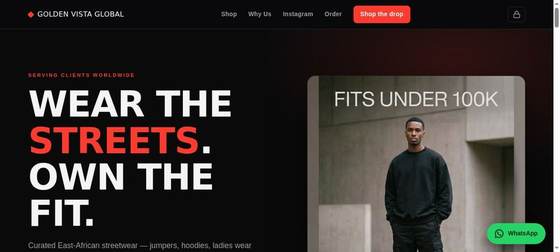
A high-contrast retail storefront with category filtering, an order form that hands straight off to WhatsApp, and a password-gated owner panel for editing products in place.
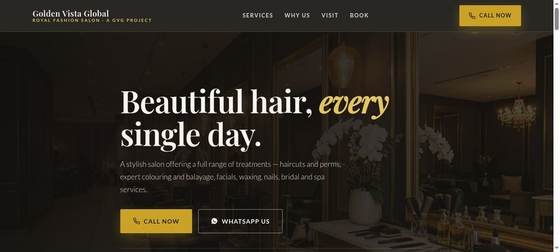
A full-service salon site spanning hair, skin, waxing, nails and bridal — with a treatment menu, stylist profiles and a booking enquiry flow that lands in the owner's inbox.
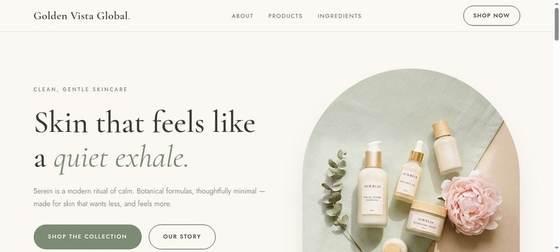
A calm, editorial brand site built around a four-step routine, with a botanical ingredient library and a soft, minimal product showcase. Quiet luxury rather than loud claims.
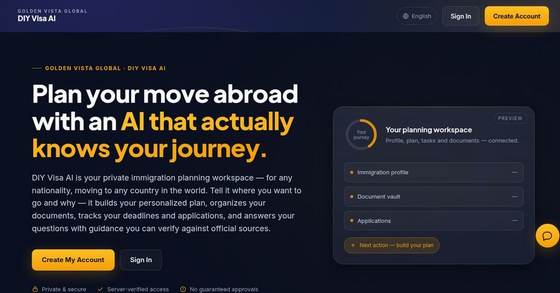
An AI-powered planning assistant that answers visa questions in plain language and turns a user's situation into a step-by-step route. A working web app, not a chatbot demo.
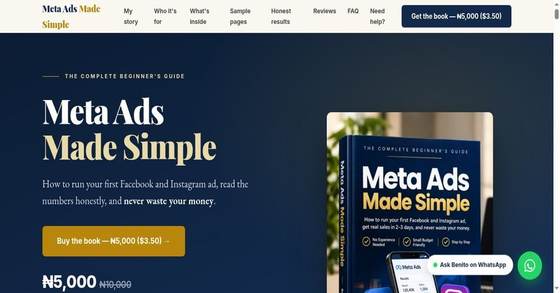
A product site for a paid-advertising course — clear offer, plain-language promise, structured curriculum and a checkout path with no friction between the headline and the buy button.
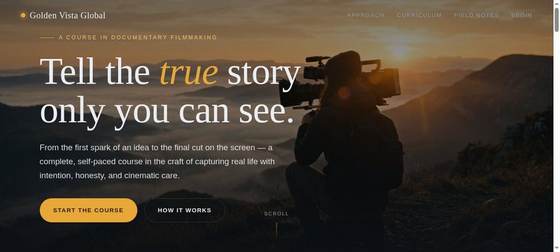
A self-paced course platform covering the full documentary craft — seven lessons across development, production and post, with expandable curriculum modules and a clean enrolment path.
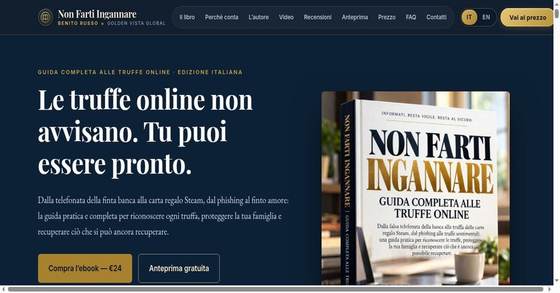
A bilingual Italian/English anti-fraud guide site — Guida completa alle truffe online — with a full chapter index, red-flag library, downloadable resources and a language toggle.
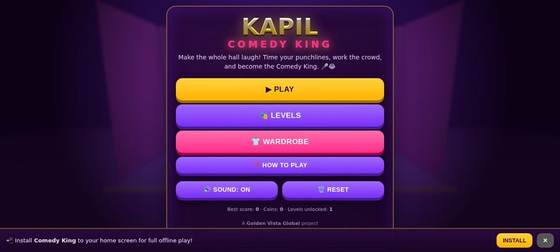
An installable progressive web app — a 3D game where you time your punchlines and work the crowd, with a wardrobe system and full offline play. Proof that the same skills stretch well past business sites.

A full dealership site for a New Zealand electric-vehicle retailer: model range, live inventory with photos and specs, finance and trade-in pages, and a test-drive booking flow — plus an admin panel the owner uses to change prices and stock himself.

A dealership site for a Chinese car importer: a filterable inventory by make, body style, fuel and price, a full detail page for every car with photos and specifications, and an admin console the owner uses to add, edit and export stock himself.
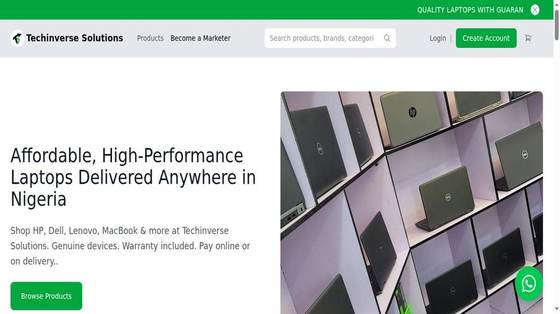
A laptop and tech retail store built for nationwide delivery in Nigeria — brand filtering, product pages with warranty and payment terms, pay-on-delivery, and a marketer programme with its own sign-up and commission tracking.
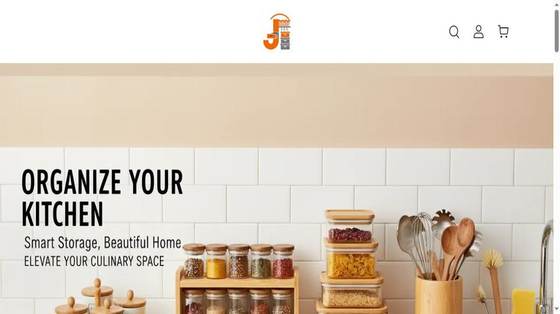
A warm, editorial home-goods storefront for kitchen organisation — glass jars, spice racks and wooden tools — with a full product grid, collection pages and a checkout flow built for browsing on a phone.

A designer-clothing storefront built around a dark, editorial look: a full product catalogue with collections, a cart and checkout flow, and an admin console for managing products — shipped at a fraction of the weight of a typical e-commerce build.
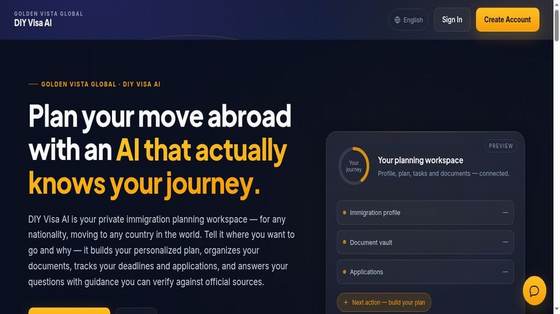
The second-generation build of the visa assistant: a private workspace where a user builds a personalised relocation plan, organises documents, tracks deadlines and applications, and gets AI guidance they can check against official sources.
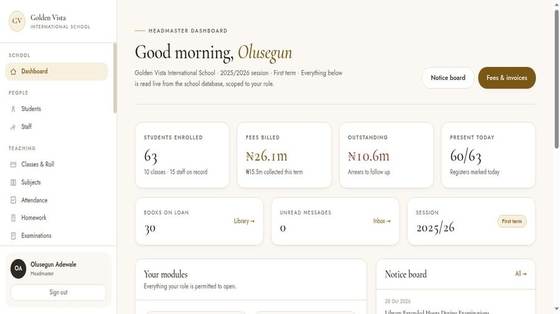
A headmaster's dashboard for a real school — enrolment, fees billed and outstanding arrears, daily attendance, library loans and whole-school communications in one screen, with role-based access for staff.
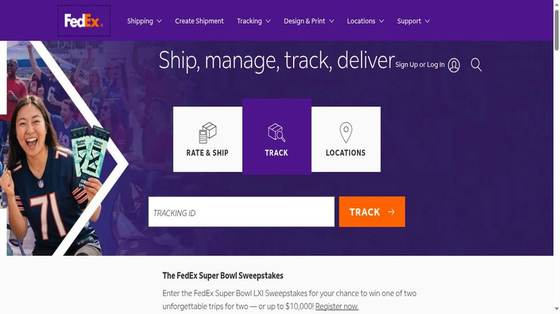
A shipping-company front end built around the three things customers actually come for: get a rate, create a shipment, track a parcel. Includes a location finder and a clean, high-contrast layout that holds up on a phone.
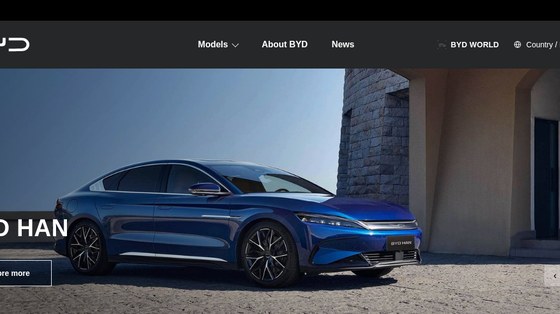
A ground-up static rebuild of an electric-vehicle manufacturer's New Zealand site: eleven pages covering the model range, technology and ownership, with every image and font localised and compressed so the whole site loads without a single third-party request.
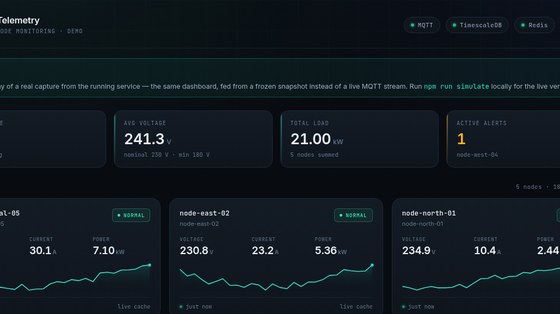
An IoT telemetry pipeline taking sensor readings over MQTT into Redis and TimescaleDB, with payload validation, batched writes, de-duplicated alerting and a live monitoring dashboard on top. TypeScript, Node.js and Docker, built to survive dropped messages and duplicate readings.
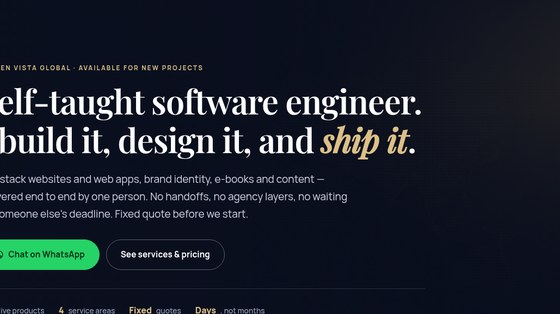
A one-page hire-me sheet: what the work is, what it costs, how long it takes and how to start — written to be forwarded to a colleague or read on a phone between meetings, with no navigation to get lost in.
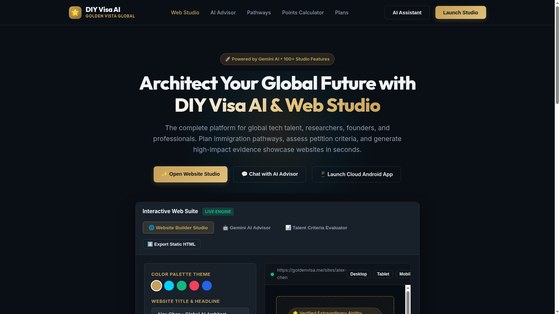
A two-part platform: an AI advisor that maps immigration pathways and scores petition criteria, plus a Website Studio that turns a professional's record into a publishable evidence site in seconds. Includes a points calculator, saved plans and static HTML export.
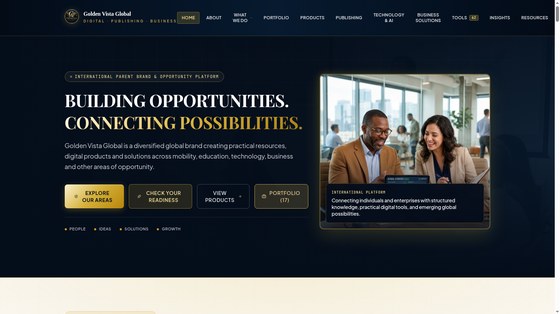
The umbrella site for the whole practice: mobility, publishing, technology and business solutions in one place, with a 62-feature index, a portfolio browser, a command palette, multi-language switching and an executive briefcase for downloads.
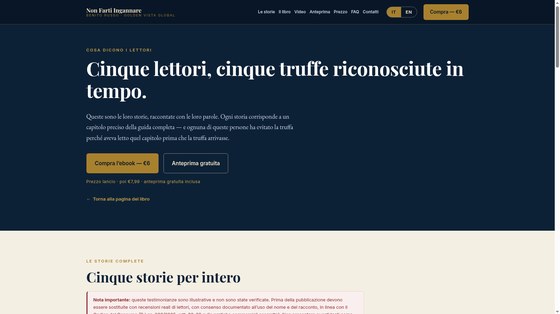
The Italian-language companion site for the anti-fraud guide: five reader stories, each tied to the exact chapter that let them spot the scam, with a free preview, launch pricing and a full IT/EN language switch.
What that looks like in practice
Not testimonials — just what each project actually became once it went live.
Started as a single handbook. Now a commercial platform with 19 tools, an AI assistant, a private community and a working checkout — selling without anyone on the phone.
74 chapters and 10 calculators could easily become unusable. Structured navigation and a 90-day programme turned a very large body of content into something a beginner can follow.
A local services site where the emergency number is never more than one tap away, service areas are explicit, and the enquiry form actually validates — so the leads that arrive are real.
Services & pricing
Starting prices in naira and US dollars, so you can budget before you get in touch — whether you're down the road or on the other side of the world. Every project gets a written fixed quote after a short conversation. These are the floor, not a guess.
One page built to sell one thing — a service, an offer, an event.
3–5 days
A complete site for a real business — the one most clients need.
1–2 weeks
Sell products online with a checkout that doesn't lose people.
2–3 weeks
Something with accounts, data or logic — not just pages.
3–6 weeks
An existing site that looks dated, loads slowly or loses visitors.
1–2 weeks
For clients who'd rather not think about the technical side.
Ongoing
Not sure which one fits? Tell me what you need and I'll say honestly whether it's a $250 job or a $2,000 one — before you commit to anything.
Naira figures are approximate, converted at about ₦1,400 to $1. You'll be quoted in the currency that suits you, and the price is fixed in writing before any work begins.
Services, skills, the full project list and contact details — as a single PDF you can forward to a colleague or keep on file.
How it works
A short message or call. What the business does, who it's for, and what a good result looks like. No forms to fill in first.
A written price, a scope and a delivery date. If it's not the right fit, I'll say so rather than take the job anyway.
A live preview link from the first day. You comment, I adjust — so the finished site is what you actually wanted.
Launched on your own domain, with a short walkthrough of how to edit it. Everything handed over — no lock-in.
Books & e-books
Written, edited, typeset and covered in-house, then exported as print-ready and digital PDFs. A finished book is the hardest thing to fake — the cover has to work at thumbnail size, the interior has to survive print, and the file has to pass a retailer's checker.

Flagship title · English
A Complete Guide to Online Scams
The consumer edition — and the book the whole catalogue grew out of. From the fake-bank phone call to the gift-card trick, from phishing to the romance scam: how to recognise every scam, protect your family, and recover what can still be recovered. Written for readers who are not confident online, because they are the ones most often targeted.
Come funzionano davvero le truffe e le frodi online
The Italian edition, rebuilt for readers who are often not confident online. Ships as a print-ready PDF, a digital PDF and a free preview chapter used as the lead magnet.
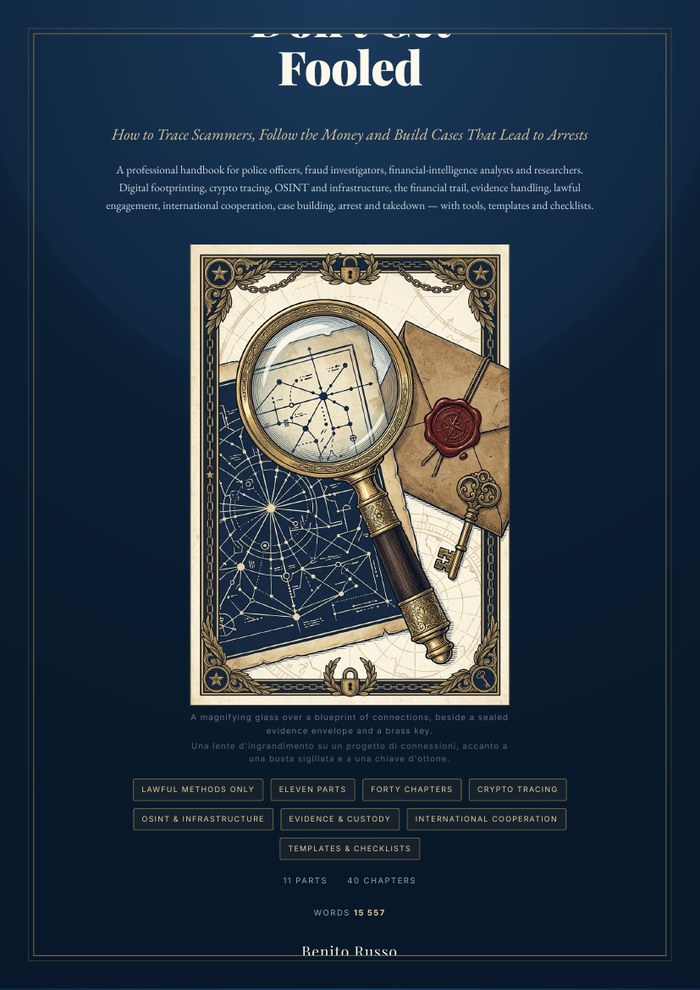
The Investigator's Handbook — Second Edition
The professional edition: how to trace scammers, follow the money and build cases that lead to arrests. Eleven parts, forty chapters — OSINT, crypto tracing, evidence handling.
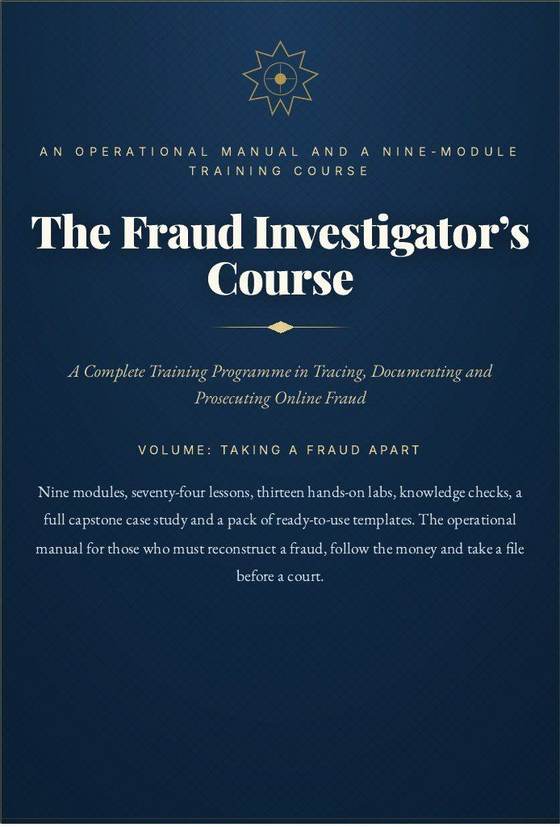
An operational manual and a nine-module training course
A complete training programme in tracing, documenting and prosecuting online fraud — built as a course book with module structure, worked examples and exercises.

Un programma completo per tracciare, documentare e perseguire le frodi online
The Italian edition of the investigator's course — the same programme rebuilt for the Italian market, with localised case material and terminology.

Scholarships, international education, sponsorship and relocation
A practical guide to studying and working abroad — scholarships, admissions, employer sponsorship, career development and global relocation, written to be used rather than just read.
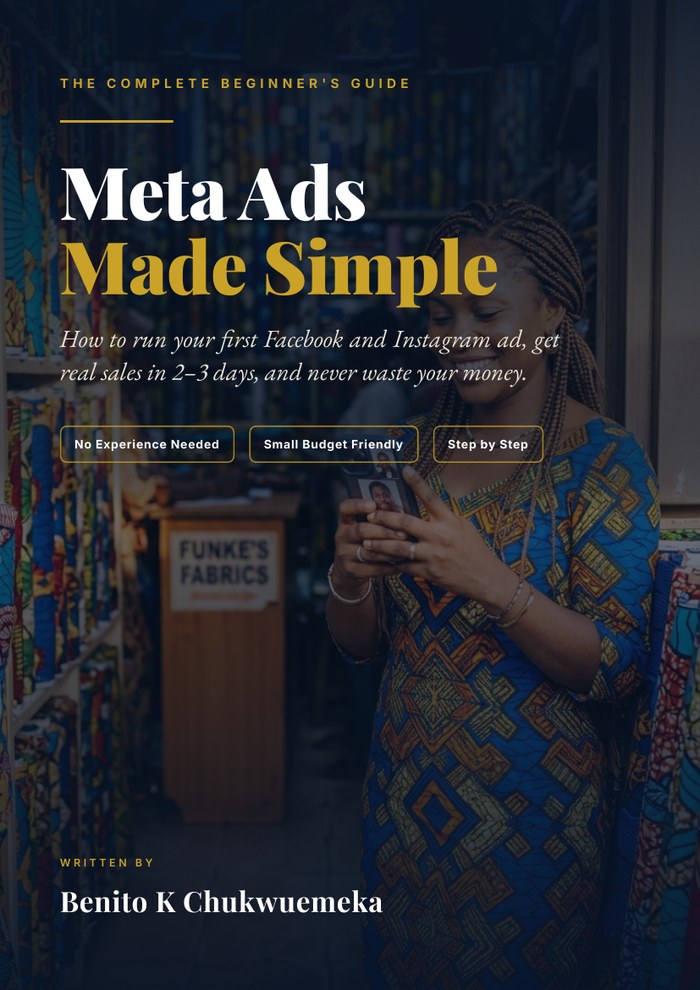
How to run your first Facebook and Instagram ad — and never waste your money
A 128-page beginner's guide to Meta advertising: campaign structure, audiences, creative, budgets and reading the results. No experience assumed, small budgets welcome.
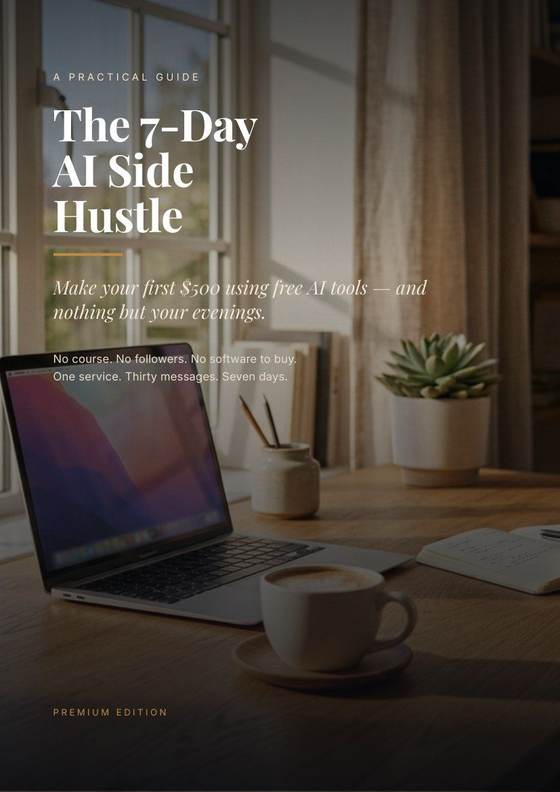
Make your first $500 using free AI tools — and nothing but your evenings
A practical, no-hype guide to earning with free AI tools. No course, no followers, no software to buy — one service, thirty messages, seven days.

Humane, reward-based training — from the first sit to a lifetime of calm
A full-length, 559-page illustrated handbook on reward-based dog training, laid out for print with a premium edition — the largest interior produced in this catalogue.
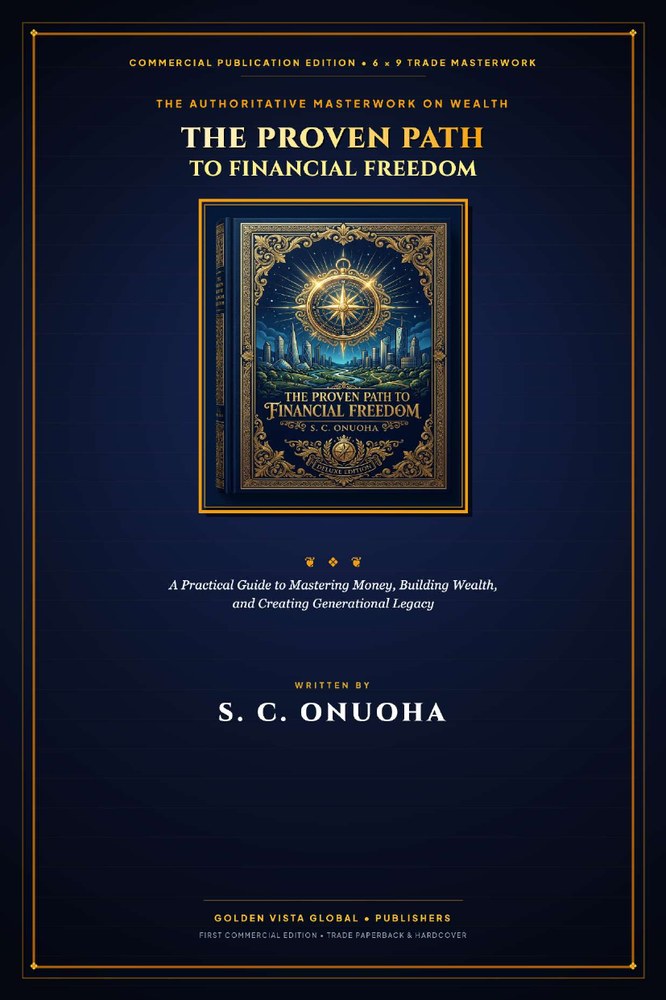
A practical guide to mastering money and building generational legacy
Produced for a client author, S. C. Onuoha — cover design, interior typesetting and print-ready export. The clearest example of the service: someone else's manuscript, turned into a finished book.
Every title above was written, edited, typeset and covered as one job — then exported to print-ready PDF, digital PDF and EPUB. If you have a manuscript, a course or a handbook that needs to become a real book, that is the same process.
Discuss a book projectNotes
Short, practical pieces about the work — no theory, no listicles. If you're about to pay someone for a website, these are the things worth knowing first.
It isn't the animation, the font, or the colour of the button. After building sites for tradespeople, salons, dealerships and schools, the same three things decide whether a visitor gets in touch.
I've watched people use the sites I build, and the pattern is boringly consistent. Nobody reads a homepage. They scan it for about four seconds looking for one answer: can this business do the thing I need, and can I reach them?
Not "Welcome to our website." Not "Excellence in service since 2009." Say the thing. "Emergency plumbing in Nelson, 24 hours." "Electric vehicles, in stock, test drive today." A visitor who has to work out what you sell will leave before they finish the sentence.
The single biggest change I make to a struggling site is moving the phone number and WhatsApp button into the header, the hero, and a sticky bar on mobile. On a phone, a customer in a hurry should never have to scroll to find you. On the plumbing site, the emergency number sits in a bar that follows the screen the whole way down.
"Get a free quote" beats "Contact us." "Book a test drive" beats "Enquire." A specific, low-commitment action gets clicked; a vague one gets ignored. And one clear button beats four competing ones — if everything is emphasised, nothing is.
Carousels nobody clicks. Stock photos of people shaking hands in offices. Long paragraphs about company values before the visitor knows what the company does. Every one of those adds weight and removes clarity.
None of this is clever. It's just the difference between a site that looks nice and a site that earns its keep.
A landing page in three to five days isn't a marketing promise — it's what happens when you remove the parts of the process that exist to justify an agency invoice.
Most website projects don't take months because the building takes months. They take months because of waiting — for a brief, for approval, for content, for a meeting that gets moved twice.
I ask what the business does, who it's for, and what a good result looks like. That's usually twenty minutes. By the end of the day you have a fixed price, a scope and a delivery date in writing. No proposal document, no discovery workshop.
I write the page order and the actual headline copy first — in plain text, no styling. If the words don't work, no amount of design rescues them. This is the step most people skip, and it's the one that decides whether the site converts.
You get a working URL on day three, not a screenshot. You can open it on your own phone, send it to a colleague, and tell me what's wrong. Changes happen the same day. This is why there's no big reveal at the end — you've been looking at it all along.
Domain connected, forms tested, images compressed, page titles written. Then a short walkthrough — usually a screen recording — showing you how to change prices, hours or photos yourself. You get the keys, not a maintenance contract.
Honestly? Content. If you have your text and photos ready, a landing page is genuinely three days. If we're writing the copy together from scratch, add a few days. I'll always tell you which one you're in before we start, so the date means something.
Plain-English guide
Right now your site lives at a free address. A domain is just the name people type — yourbusiness.com instead of a long link. Here's the whole process, no jargon.
Go to a registrar — Namecheap, Cloudflare or GoDaddy all work. Type your business name and see what's free.
A .com costs roughly $10–15 a year. A country ending like
.co.nz or .ng costs a bit more. Pay for one year to start —
don't let anyone sell you ten.
Tip: if your first choice is taken, add your town or trade —
nelsonplumbing.com reads better than a hyphenated version.
Your registrar will have a section called DNS or Manage DNS. That's where you tell the internet where your site lives.
If your site is hosted on Vercel, go to your project → Settings →
Domains → add your new domain. Vercel then shows you exactly two records
to copy into your registrar's DNS page — usually an A record and a
CNAME record. Copy them across, save, and wait.
It can take a few hours for the change to spread — sometimes up to a day. That's normal. Nothing is broken; it's just propagating.
You want https:// and a padlock in the address bar. On Vercel this is one
click — SSL is issued automatically once the domain is connected. On other
hosts, look for "Free SSL" or "Let's Encrypt" and enable it.
Without it, browsers show "Not secure" next to your name, which quietly costs you trust before a visitor reads a single word.
hello@yourbusiness.com looks far more credible than a Gmail address on an
invoice. Two easy routes:
Cheapest: Cloudflare Email Routing — free. It forwards
hello@yourbusiness.com straight to your existing Gmail, and you reply from
Gmail. Takes about ten minutes to set up.
Full mailbox: Google Workspace or Zoho Mail, roughly $6/month or free respectively. You get a real inbox you can send from as your business.
Connecting a domain is included when I build your site — you buy the name in your own account (so you always own it), and I'll do the DNS, the padlock and the email forwarding. You never have to look at a settings page.
Questions
Yes — two full rounds of changes are included in every quote, and in practice most projects need fewer. Because you see a live preview from day one, small adjustments happen as we go rather than piling up at the end. If you want a completely different direction after the build is finished, that's a new scope and I'll quote it honestly rather than pretending it's free.
Half to start, half when it goes live. That's it — no deposits on top, no hidden hosting markup. For larger platforms I split it into three stages so you're never far ahead of what you've actually seen. I'll invoice in naira or US dollars, whichever suits you, and the amount is fixed in writing before any work begins.
Three things: what your business does, who you're trying to reach, and any photos or a logo you already have. That's genuinely enough for me to begin. If you don't have copy, we'll build it from a short conversation. If you don't have photos, I'll use clean placeholders you can swap later. Missing content is not a reason to delay starting.
A landing page is usually 3–5 days. A full business site is one to two weeks. Larger platforms run three to six weeks. The clock starts when I have your content — text and photos are the thing that slows projects down, not the build.
It helps a lot, but it's not a blocker. If you don't have copy, I'll structure it with you from a short conversation about your business. If you don't have photos, I'll use clean placeholders and you can swap them in later from the panel.
You get a walkthrough of how to edit your own content — prices, hours, photos, news. If you'd rather not touch it, the care plan covers changes for you. Either way, you're not dependent on me to change a phone number.
Yes — most of the work in the showcase was built for clients in other countries. Everything happens over WhatsApp, email and a live preview link, so time zones have never been a problem. Payment is agreed in writing before work starts.
You do. The domain, the hosting account, the code and the content are all in your name. If you ever want to move to another developer, everything goes with you — there's nothing to buy back.
Usually, yes. Send me the link and I'll tell you honestly whether it's worth repairing or rebuilding — and which one costs you less in the long run. Sometimes the answer is "leave it alone, it's fine".
Get in touch
Fill this in and it comes straight to my inbox — you'll get a real reply, usually within one working day. Prefer to talk? WhatsApp and email are right there.